




Nature’s Performance Fibre
Merino wool is nature’s performance fibre. Made for mountain sheep living in harsh mountain conditions, come rain, snow, or scorching sun. And out there, Merino wool is nature’s choice: naturally temperature-regulating, moisture-wicking, and odour-resistant. We just put it in a t-shirt.
MERINO WOOL BENEFITS
So, what are the performance benefits of Merino wool? What makes Merino wool so good, and why should it be a staple in your wardrobe? Here’s the lowdown, then go check out the Merino science for the real data.

1. Merino buffers moisture
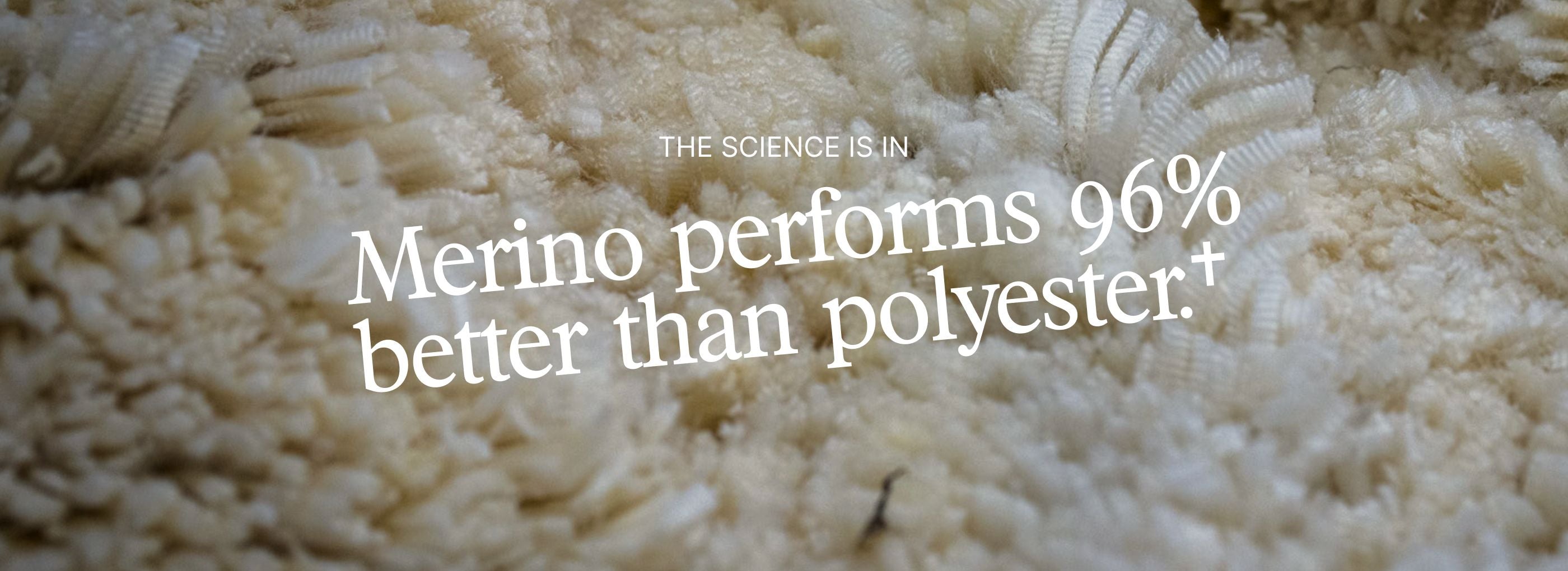
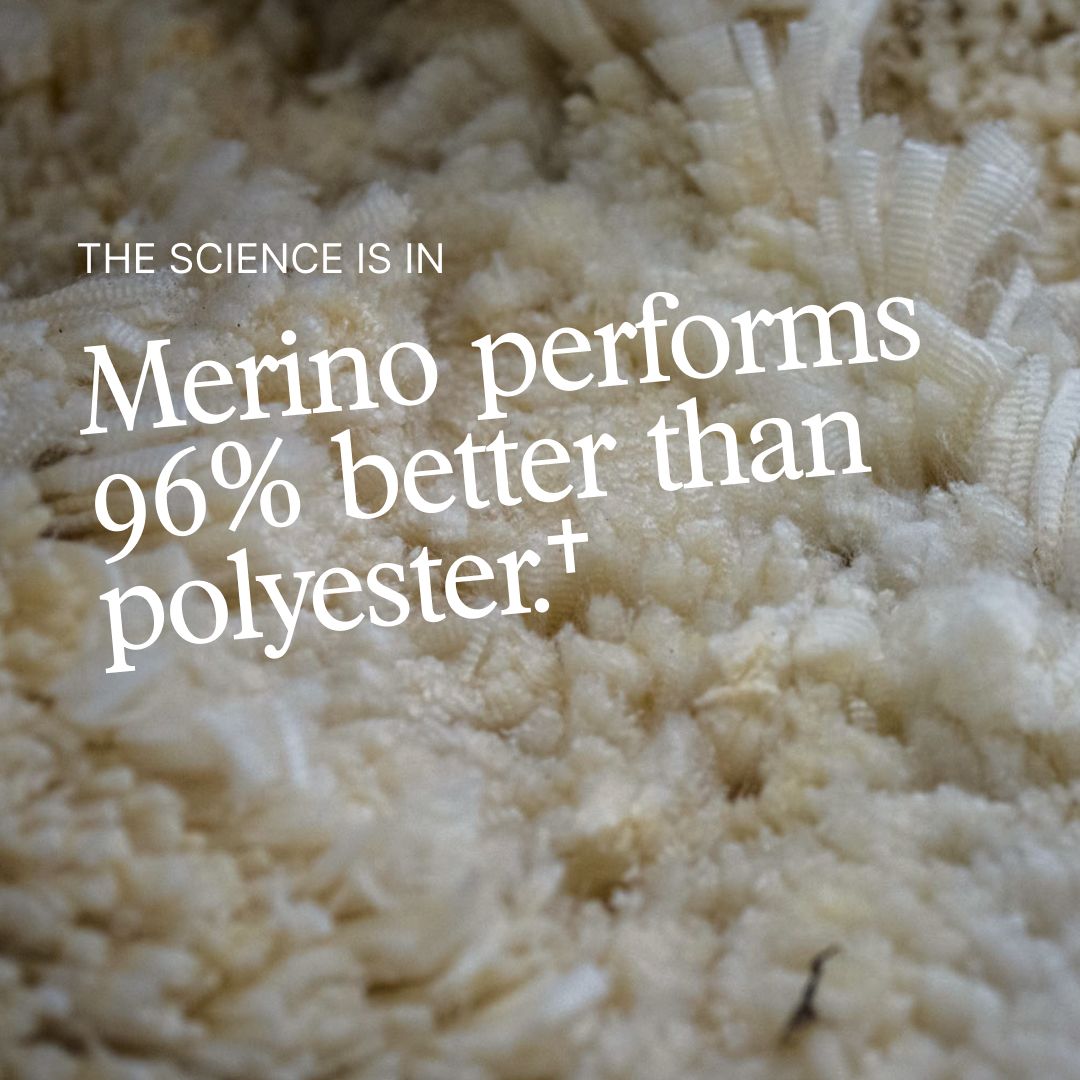
Merino is 96% better than polyester at buffering moisture, meaning it absorbs moisture (sweat) from your skin and slowly releases it in changing conditions, keeping you drier and more comfortable when the day heats up or you’re pushing through a climb.

2. Merino regulates your temperature
Merino naturally smooths out temperature extremes, keeping your temp steady during sudden weather shifts or stop-go activities. Instead of overheating or suddenly shivering, Merino adapts to you, keeping you cool when you’re hot and warm when you stop.

3. Merino resists odour
Merino wool fibre both naturally resists odour and creates a less favourable environment for odour-causing bacteria to thrive. Less damp fabric against your skin, less post-mission stink, more wear between washes than your synthetic alternatives.

4. Merino beats the post-exercise chill
That moment when you stop moving and the cold hits? Merino buffers it. Wearers rated Merino significantly warmer and more comfortable than cotton, viscose, and polyester in the 25 minutes after exercise in a moderately cold environment.

5. Merino is warm when wet
Merino wool doesn’t stop working when it’s wet. Instead, Merino's fibre structure keeps generating a small amount of heat as it absorbs moisture, continuing to regulate your temperature instead of turning cold and clammy against your skin

6. Merino is super soft next to skin
Merino wool is significantly finer than the thicker, itchy wool in Grandma’s sweaters. That means it bends against your skin instead of prickling like thicker fibre, and creates more of a high-performance feel. Smooth and soft with a clean, sleek finish.
NOW, LET'S GO TO WOOL SCHOOL
How does Merino wool work?
The biggest difference between Merino and other fabrics is that Merino wool doesn't just insulate or wick moisture. It actively regulates. But how do all these Merino wool benefits work at a fibre level? Let’s start with the basics.

Keratin
Merino fibre is made of keratin, the same protein as human hair. Keratin’s structure has two key layers: a hydrophobic outer layer that repels water, so rain and splashback bead off, and a hydrophilic core that attracts moisture vapour and can absorb up to 30-35% of its weight in moisture vapour before feeling wet.

Fibre Structure
This fibre structure is how Merino manages moisture and regulates your temperature – because those two things go hand in hand. Sweating is your body’s way of cooling you down and regulating your temperature, so when that sweat gets stuck next to your skin, you stay warm and you feel wet. That’s why ‘breathable’ clothing that can absorb moisture and release it, is so important. Like Merino.

Exothermic Reaction
As Merino absorbs moisture vapour from your skin, it undergoes an exothermic reaction. It slowly releases heat, which keeps you warm in cold conditions. That’s what keeps your microclimate steady between working and recovering. It’s also what makes Merino wool good for both summer and winter: when you’re sweating in the heat, Merino helps that sweat vapour escape, which cools you down and helps regulate your body temperature.
A natural plant fibre, Hemp is breathable, three to four times stronger than cotton, and gets softer every time you wash it. It adds extra durability right where it’s needed.
WOOLMARK MANAGING DIRECTOR, JOHN ROBERTS
MERINO IN THE HEAT
Is Merino wool good for heat?
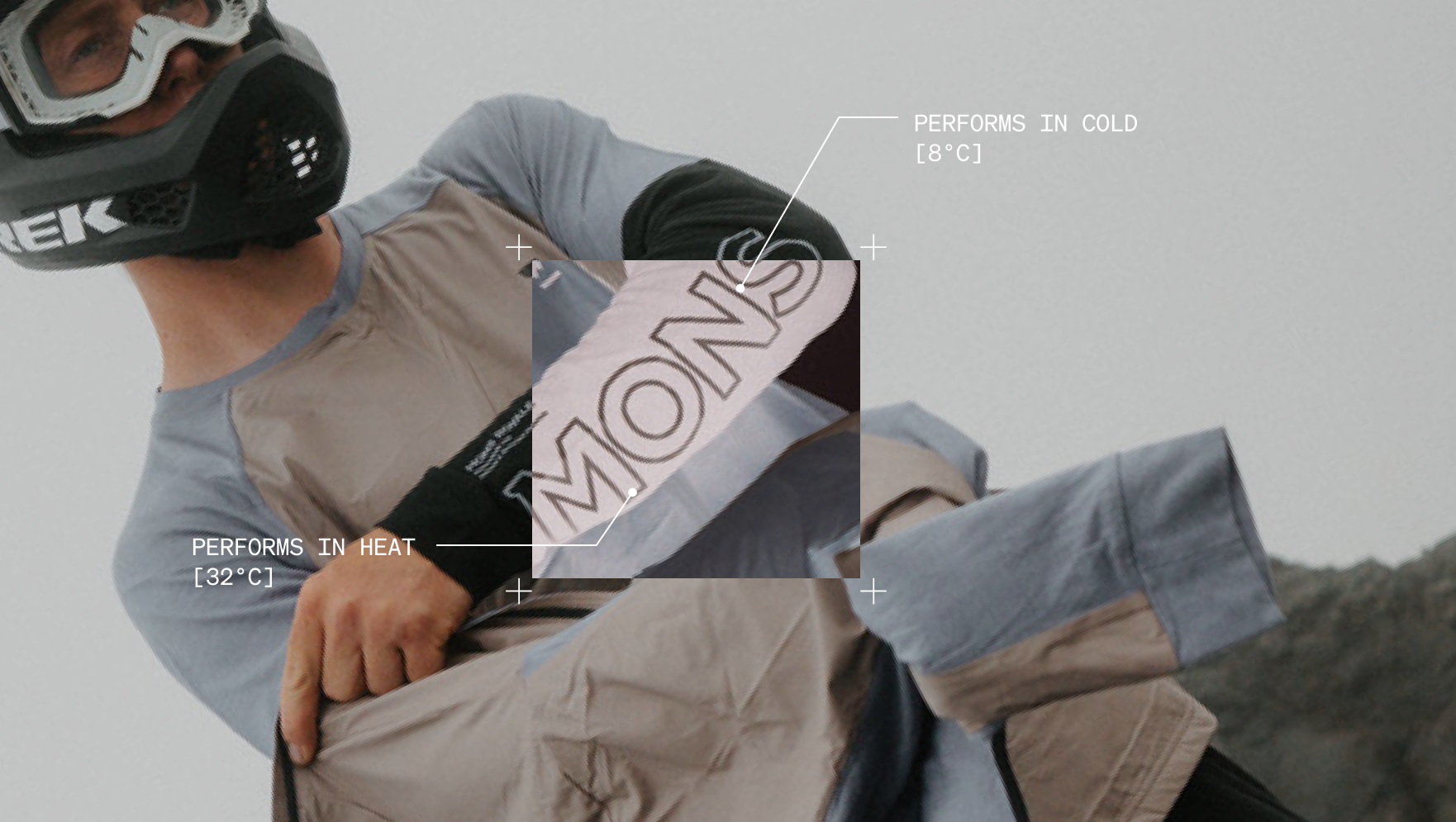
Even when tested against sweat-wicking synthetics, Merino holds its own. A University of Otago study compared Merino wool, a wool/polyester blend, and polyester on ten trained athletes in both hot (32°C) and cold (8°C) conditions, tracking measures including heart rate, core temperature, heat content of the body, and time to onset of sweating. Of the three, the Merino single-jersey garment came out the best performer, in the heat as well as the cold. It also keeps regulating temperatures when you stop moving, smoothing out the post-exercise chill that comes when sweat sits cold against your skin.

Is Merino wool really anti-odour?
Merino is also naturally odour-resistant, which is another win in the heat. Merino wool is hygroscopic, meaning it can absorb 30-35% of its weight in moisture, keeping the skin surface drier and discouraging bacterial growth. It then absorbs and locks away odour during wear, actively binding odour within the fibre where bacteria do not thrive. Keeping your tee fresher for longer, especially compared to polyester. Wool garments also hold onto 66% less body odour than polyester and 28% less than cotton after washing.
NATURAL FIBRES
What other natural fibres does Mons Royale use?
We see a world where natural fibres have replaced synthetic materials that cost the planet, especially in the outdoor apparel industry. We hero Merino wool as our primary performance fibre, followed by other natural fibre blends.

Tencel™ Lyocell
Engineered from wood pulp sourced from sustainably managed forests, Tencel is biodegradable, strong, soft and breathable. It brings an added softness to materials.

Organic Cotton
A natural choice, organic cotton gives our lifestyle looks their casual feel while adding structure and durability to Merino blends. Soft on skin, better on the planet.

Hemp
A natural plant fibre, Hemp is breathable, three to four times stronger than cotton, and gets softer every time you wash it. It adds extra durability right where it’s needed.
SCIENCE SAYS
The Merino science
Don’t just take our word for it. Take a dig through the Merino science and see what the lab coats say.


REFERENCES
- Determining the Physiological and Sensory Performance of Wool, Wool/Polyester and Polyester Garments in Hot and Cold Conditions — Laing et al., University of Otago, published in Ergonomics — the ten-athlete hot (32°C) and cold (8°C) trial behind the heat and cold comparison in Section 3.
- A New Approach to Demonstrate the Exothermic Behavior of Textiles by Using a Thermal Manikin — Abedin & DenHartog, Polymer Testing — the thermal manikin methodology behind the 96% moisture-buffering figure in Section 1.
- Discover Wool's Dynamic Breathability for Sport — The Woolmark Company's summary of the four-year North Carolina State University research programme behind the 96% / 45% / 26% moisture-buffering comparison against polyester, cotton and viscose in Section 1.
- Clothing Impact on Post-Exercise Comfort: Skin-Clothing Physiology in Transient Environment — Abedin & DenHartog, Ergonomics — the human-trial data behind the post-exercise chill claim in Section 1.
- Antibacterial Properties of Non-Modified Wool, Determined and Discussed in Relation to ISO 20645:2004 Standard — Ivanković, Rajic, Ercegovic Razic, Rolland du Roscoat & Skenderi, Molecules, 27(6), 1876 (2022) — found bacteria bind strongly to wool fibres and lift away with the fabric, referenced in Section 3.
- Odor Intensity in Apparel Fabrics and the Link with Bacterial Populations — McQueen, Laing, Brooks & Niven, Textile Research Journal, 77(7), 449–456 (2007) — University of Otago wearer trial comparing wool, cotton and polyester, referenced in Section 3.
LEARN MORE

Transparency
We partner with the world’s best in Wool manufacturing to ensure quality, transparency, and ethical production. We are leading the charge in future-proof apparel.

Merino Science
Merino Wool is 96% better than polyester at sweat management. It adapts in ‘stop-go’ sports to keep your microclimate dialled - warm when you’re standing still, dry when you’re pushing hard.

Our Story
Sometime back in the early noughties, a storm-chasing Kiwi ski bum living out of a ski bag pondered a big problem - his gear wasn't cutting it for both epic mountain missions and post-shred hangs at the bar. Here we are 16 years later.


